Materials & Manufacturing
How to Spot High-Quality Corrugated Board for Pet Products
Don't let cheap cardboard ruin your brand. Learn the 4 professional tests to evaluate GSM, flute types, and glue quality when sourcing corrugated pet products.
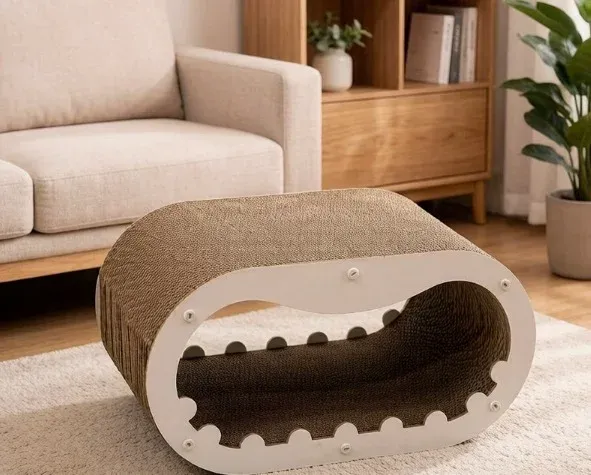
In the pet product industry, corrugated cardboard is everywhere. It is used for cat scratchers, pet beds, playhouses, and interactive toys.
For B2B buyers, the immediate temptation is to source the cheapest board possible to maximize margins. However, low-quality corrugated board is a false economy. It collapses under a cat's weight, generates massive amounts of dust, and will ultimately destroy your brand's reputation through negative reviews.
As a professional buyer, you need to know how to look beyond the price quote. Here is a B2B guide on how to spot high-quality corrugated board for pet products, using four essential tests.
1. The Anatomy of Quality: What to Look For
Before you can test the board, you need to understand its core components. High-quality pet corrugated board consists of three critical elements:
- High GSM (Grams per Square Meter): This is the weight and density of the paper. For pet products that require durability, such as cat scratchers, you should demand 110-120 GSM face paper. Cheaper boards often use 80-90 GSM, which is too thin and tears instantly.
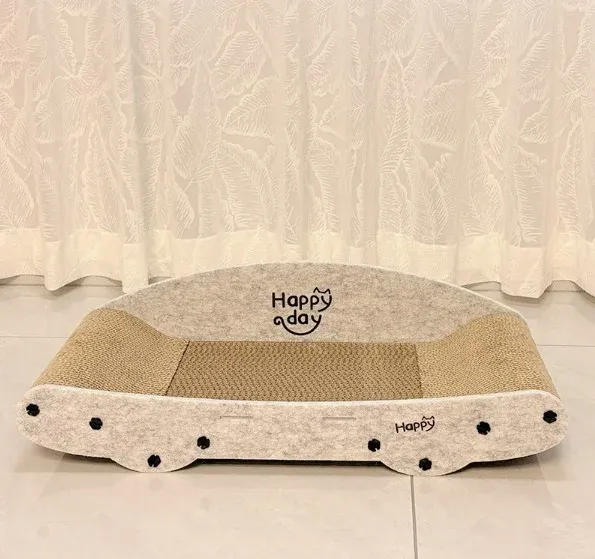
- The Right Flute (BC Flute): The wavy layer inside is called the flute. A single B-flute is common, but for heavy-duty pet furniture, BC flute is the gold standard. It combines a larger B-flute with a smaller C-flute, creating a dense, crush-resistant structure. You can see how this holds up in our flat cat scratchers.
- Non-Toxic Adhesives: Cats constantly lick and chew their products. High-quality board uses eco-friendly starch glue or safe hot-melt adhesives, ensuring zero toxic fumes or chemical smells.
2. The 4 Hands-On Tests for B2B Buyers
When a supplier sends you a sample, do not just look at it. Put it through these physical tests.
Test A: The Tear Test (Checking Fiber Length)
Slowly tear a piece of the cardboard in half.
- High-Quality: You should see long, tough, interwoven paper fibers at the torn edge. The tear should require some effort.
- Low-Quality: The board will tear easily, leaving a clean break with short, dust-like fibers. This indicates heavily recycled, low-grade pulp that will crumble quickly.
Test B: The Peeling Test (Checking Glue Quality)
Try to peel the top flat layer away from the wavy middle layer.
- High-Quality: The paper fibers should rip apart before the glue gives way. You want the glue to be stronger than the paper itself.
- Low-Quality: The layers will separate cleanly with almost no resistance. This means the factory used cheap glue or applied too little of it, and the product will fall apart when a cat scratches it.
Test C: The Edge Squeeze Test (Checking Structural Density)
Pinch the edge, or cross-section, of the board firmly with your thumb and forefinger.
- High-Quality: The board should feel rock-solid and resist compression. The BC flute structure will hold its shape firmly.
- Low-Quality: The edge will feel spongy and crush easily. If it compresses under your fingers, it will flatten instantly under a 10-pound cat.
Test D: The Print Check (For White Kraft Surfaces)
- High-Quality: The white kraft surface should be smooth and consistent. When you test-print on it, the colors should look vibrant and not bleed into the paper fibers.
- Low-Quality: The surface will feel rough, uneven, or have a greyish tint. Ink will look dull and may smear.
3. The Hidden Costs of Low-Quality Board
Why do some suppliers quote you such low prices? Because they are cutting corners on materials. But this saving comes with hidden B2B costs.
- Increased Freight Volume: Low-quality board is less dense, meaning it flattens easily. When stacked in a shipping container, the weight of the boxes above will crush the cheaper products.
- Higher Return Rates: If the product sheds excessively or falls apart, your customers will return it. On platforms like Amazon, high return rates lead to account suspension.
- Compromised Brand Loyalty: A buyer might forgive a high price, but they will never forgive a product that makes a mess of their home.
How to Secure a Reliable Supply
To guarantee consistent quality, you must partner with a factory that has a dedicated production line and strict QC standards. When negotiating your next order, do not just ask for the price. Ask for the technical specifications.
Request the GSM of the paper, the flute profile, and the type of glue used.
If you are ready to build a high-quality product line, explore our OEM and private label cat scratcher programs to see how we maintain rigorous material standards for global brands.
Conclusion
Spotting high-quality corrugated board requires a bit of hands-on diligence. By checking the GSM, tearing the fibers, pinching the edges, and asking the right technical questions, you can separate the premium factories from the cheap middlemen.
Want to test the quality of our corrugated board yourself?
👉 Contact Us today to request a free Gold Sample of our 110-120 BC flute board, or view our full product range to explore our complete range of heavy-duty, shed-resistant pet products.