
Customization & Packaging
OEM vs. ODM for Cat Scratchers: Which is Right for Your Brand?
Unsure whether to use OEM or ODM for your cat scratcher line? Compare costs, development times, and customization levels to choose the best model for your pet brand.
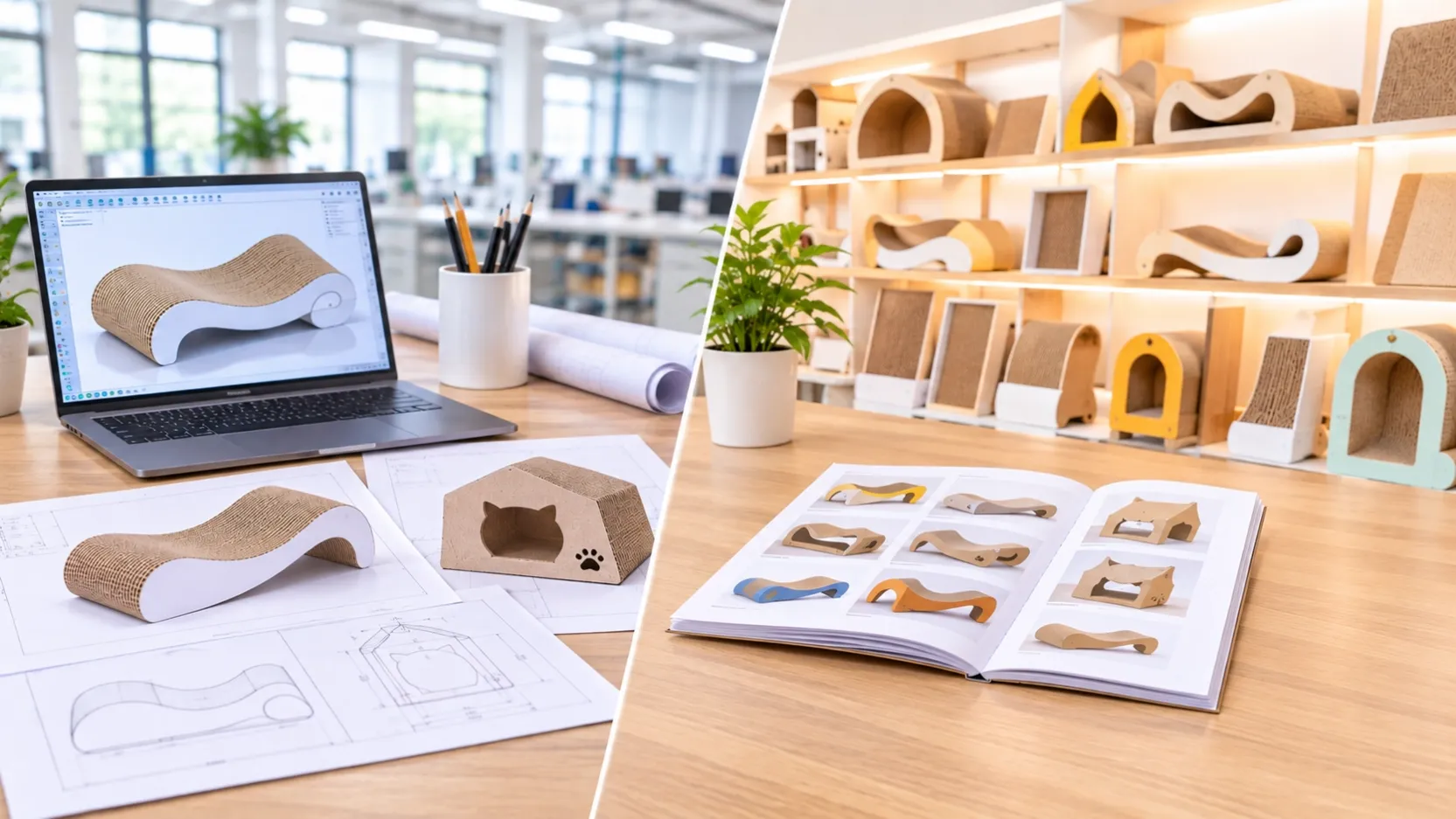
Launching or expanding a pet brand requires making critical supply chain decisions. One of the most important choices you will face when sourcing cat scratchers is whether to use an OEM (Original Equipment Manufacturer) or ODM (Original Design Manufacturer) model.
Understanding the difference between the two is not just about manufacturing jargon—it directly impacts your upfront investment, time-to-market, product differentiation, and profit margins.
Here is a comprehensive B2B guide to help you decide which model is right for your brand.
What is OEM and ODM?
To make the right choice, let's first define the two models clearly as they apply to the pet product industry.
- OEM (Original Equipment Manufacturer): In this model, you (the brand owner) provide the specific design, dimensions, materials, and specifications to the factory. The factory simply manufactures the product exactly as you requested and applies your branding.
- ODM (Original Design Manufacturer): In this model, the factory already has a catalog of existing, pre-designed cat scratchers. You select an existing design from their catalog, and the factory manufactures it and applies your logo and packaging.
The Case for OEM: Total Brand Control
If your goal is to build a highly unique brand identity and dominate a niche, OEM is usually the way to go.
Advantages of OEM:
- 100% Differentiation: You own the intellectual property (IP). Your product won't be found in a dozen other Amazon stores.
- Customization: You dictate the exact GSM (density) of the corrugated board, the shape of the wooden frame, and the specific weave of the sisal.
- Brand Premium: Unique designs allow you to price your products higher.
Challenges of OEM:
- Higher Upfront Cost: You may need to pay for new tooling, molds, or cutting dies.
- Longer Lead Times: The factory needs time to create 3D renderings, build prototypes, and run trial production (usually 15-25 days for sampling).
- Higher MOQ: Factories often require higher Minimum Order Quantities to offset the setup costs for custom production lines.
The Case for ODM: Speed and Efficiency
If you are new to the pet industry, testing the waters, or looking to expand your catalog quickly, ODM is a powerful strategy.
Advantages of ODM:
- Time-to-Market: Because the design already exists, you can bypass the prototyping phase and go straight to ordering samples for approval.
- Lower Risk: The factory has already tested these designs in other markets. You know they are functional and easy to produce.
- Lower MOQ: Many factories offer lower MOQs for their existing ODM products because they already have the materials and tooling ready.
Challenges of ODM:
- Homogenization: The exact same product might be sold by your competitors (though your packaging and branding will be different).
- Less Flexibility: You cannot easily change the core shape or material of the product, though you can usually customize the color, logo, and packaging.
The "Hybrid" Approach: The Best of Both Worlds
Many successful pet brands use a hybrid approach, often referred to as "ODM Base + OEM Packaging."
Under this model, you select a proven, high-quality ODM structure from the factory (saving mold costs and time), but you invest heavily in OEM-level custom packaging. You design a premium box, include custom printed care cards, and apply your unique branding.
This allows you to launch quickly and affordably, while still offering a premium unboxing experience that justifies a higher retail price.
How to Choose: 4 Questions to Ask Yourself
To determine which model fits your business, ask yourself these four questions:
- What is my budget? If you have a strict budget, stick to ODM and invest in packaging. If you have capital for R&D, explore OEM.
- What is my timeline? Need to launch in 45 days for a holiday season? Choose ODM. Have 4-6 months to develop a product? OEM is possible.
- Do I have design resources? Do you have a team that can create CAD drawings or 3D models for OEM? If not, relying on the factory's ODM designs is much safer.
- What is my competitive advantage? If you compete on price, ODM is best. If you compete on unique aesthetics or structural innovation, you need OEM.
Conclusion
There is no universally "correct" choice between OEM and ODM. The right model depends entirely on your stage of business and your brand strategy.
A professional, reliable factory should be able to support both models seamlessly, guiding you through sampling, tooling, and packaging to ensure a successful launch.
Ready to develop your next cat scratcher line?
👉 Download Our Full Catalog for ODM options, or Contact Us to discuss your custom OEM project today.