Sourcing & Buying Guides
How to Calculate Shipping Costs for Volumetric Cat Scratchers
Cat scratchers are light but bulky, so freight is charged on size, not weight. Learn the volumetric weight formula, a worked example, and how flat-pack designs cut shipping costs.
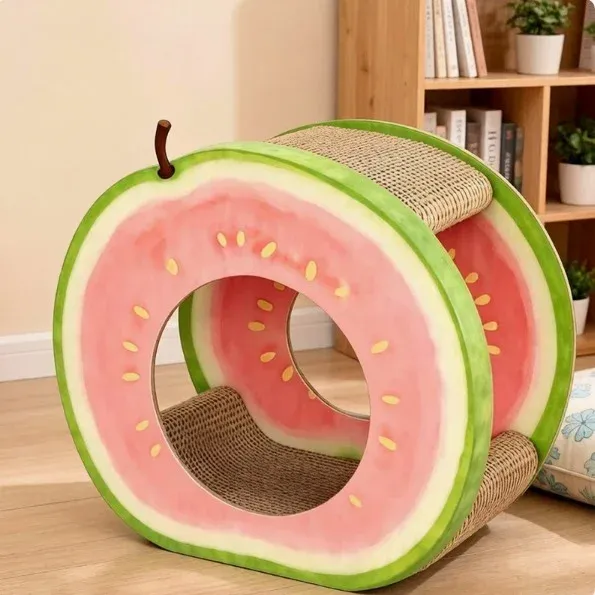
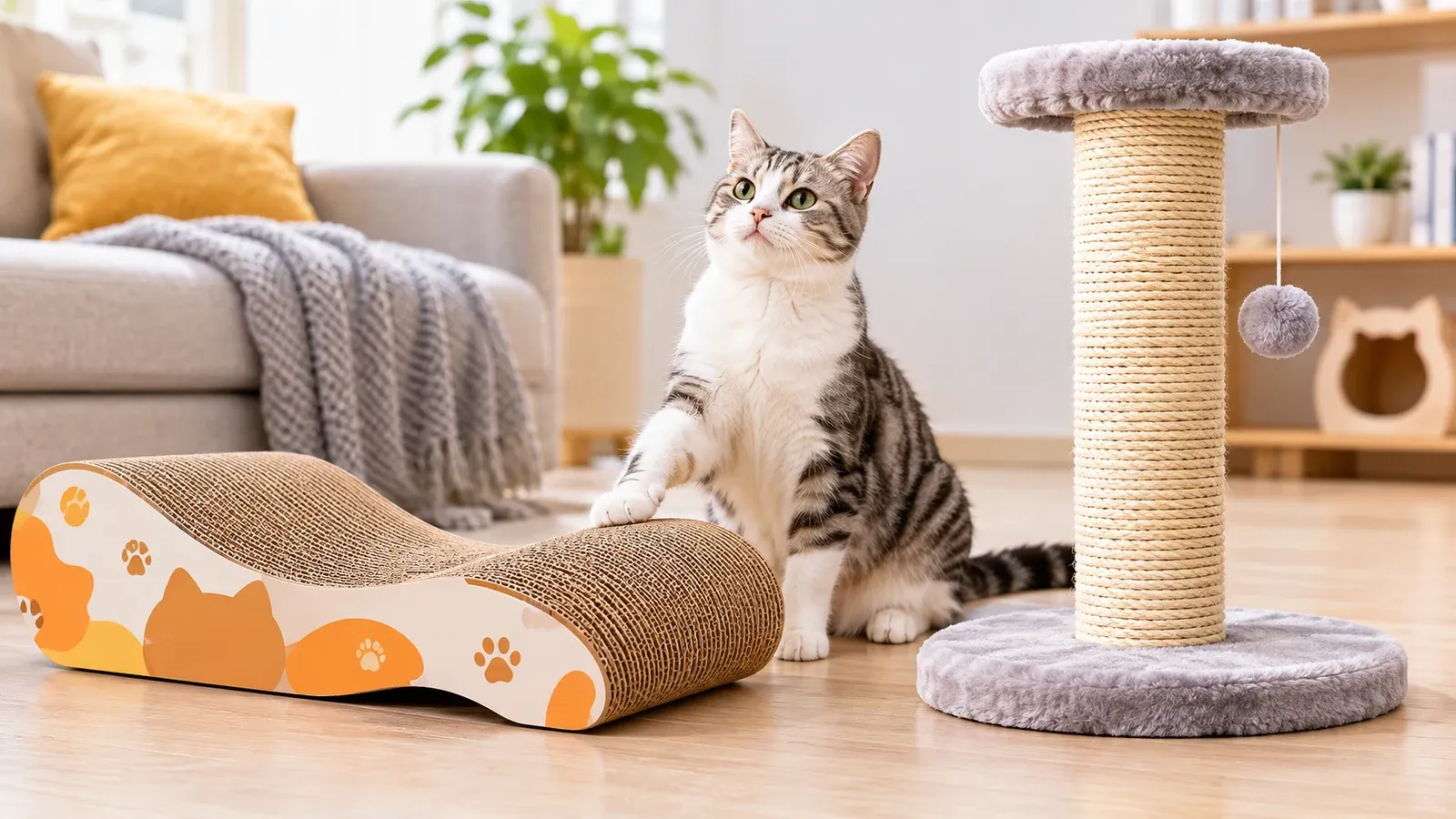
A corrugated cat scratcher is mostly air. The board itself is light, but the finished shape is large — and freight carriers charge for the space a parcel occupies, not just how heavy it is. That is why two orders with the same weight can have very different shipping bills, and why a flat-packed scratcher can cost far less to ship than an assembled one of the same size.
This guide shows how volumetric weight is calculated, works through an example using Coolypet's own product dimensions, and lists the four numbers to get from the factory before you ask a forwarder for a quote.
Why size decides the freight bill
For most air and sea shipments, the carrier compares two numbers and charges on the larger one:
- Actual weight — what the carton weighs on a scale.
- Volumetric weight — what the carton "weighs" based on the space it takes up.
The larger of the two is the chargeable weight, and the freight rate is applied to that. A cat scratcher carton is almost always volumetric: the board is light, the box is big. So the fastest way to cut shipping costs is usually not to find a cheaper rate — it is to make the carton smaller.
The volumetric weight formula
For one carton, the formula is:
Volumetric weight (kg) = Length (cm) × Width (cm) × Height (cm) ÷ divisor
The divisor depends on the carrier and the transport mode, so confirm it with your forwarder before you quote — do not assume one number fits every shipment. The two divisors buyers meet most often are:
Mode | Common divisor | When it is used |
|---|---|---|
Air freight | 5,000 or 6,000 | Express and air cargo; the exact divisor varies by carrier |
Sea freight | 1 CBM = 1,000 kg | Ocean freight is usually charged per cubic metre (CBM), where CBM = Length (m) × Width (m) × Height (m) |
For sea freight, the same idea applies in cubic metres: a carton of 0.1 CBM counts as 100 kg for charging purposes, even if it actually weighs far less. Amazon FBA storage fees work the same way — they are based on the cubic feet a product occupies — which is why bulky shapes cost more to store as well as to ship.
Worked example: a flat board vs. a novelty shape
The numbers below use dimensions published on Coolypet's own product pages. They are an illustration of the formula, not a freight quote — the figure that decides your bill is the packed carton size, which is smaller than the assembled size for every foldable design. Ask the factory for the packed dimensions before you calculate a real order.
A flat board: M-shape flat scratcher, 44 × 22.5 × 4 cm
44 × 22.5 × 4 = 3,960 cm³
- ÷ 5,000 = 0.79 kg volumetric weight
- ÷ 6,000 = 0.66 kg volumetric weight
A novelty shape, assembled: Meow TV, 53 × 23 × 30 cm
53 × 23 × 30 = 36,570 cm³
- ÷ 5,000 = 7.31 kg volumetric weight
- ÷ 6,000 = 6.10 kg volumetric weight
The assembled novelty shape takes up roughly nine times the volume of one flat board, so its volumetric weight is roughly nine times higher — even though both are made from the same 110-120 BC flute board. That gap is the whole shipping story for cat scratchers: shape and packing decide the freight bill far more than material does.
The same maths applies to the Christmas Stocking L-Shape Cat Scratcher (32 × 23 × 50 cm assembled, 36,800 cm³, or 7.36 kg at a 5,000 divisor). But neither novelty shape ships assembled. Both are foldable, ship completely flat-packed, and are assembled by the end user — so the packed volume, and the freight bill, is far lower than the assembled numbers above suggest. The product pages say to check the flat-pack shipping dimensions with the factory, and that is the number to use in the formula.
Why flat-pack changes the maths
Flat boards are the cheapest shape to ship for a simple reason: they stack tightly, with almost no wasted space in the carton. Coolypet's multi-shape flat cat scratchers are described on the product page as having an extremely low volumetric weight, which reduces sea freight costs and Amazon FBA storage fees — and five shapes (Bone, M, S, Straight, Wave) can be mixed in one order without adding shipping complexity.
Foldable novelty shapes get the same benefit a different way. The Retro TV-Shaped Cat Scratcher "Meow TV" is a 2-tier unit that ships completely flat and is assembled puzzle-style by the buyer; the product page notes this drastically reduces volumetric weight, saving on ocean freight and Amazon FBA fees. The Christmas Stocking works the same way. So when you compare two designs, compare their packed volume, not their assembled size — a tall novelty shape and a flat board can end up surprisingly close once both are packed flat.
Two other packing choices move the number as well:
- Units per carton. More units in one carton usually means a lower freight cost per unit, until the carton gets too heavy or too large for the carrier's limits. Ask how many units fit per carton for your shape.
- Retail packaging. A printed retail box protects the product and looks better on a shelf, but it adds volume. A plain export carton is smaller. If freight is tight, quote both and compare the per-unit landed cost, not just the packaging price.
The four numbers to get before you quote freight
Do not ask a forwarder for a price with only the product name. Send these four figures, and the quote you get back will be one you can actually use:
- Packed carton dimensions (L × W × H) — for the flat-packed product, not the assembled size.
- Units per carton — and the gross weight of one full carton.
- Total cartons and total CBM — for the whole order, so the forwarder can price sea freight by volume.
- Destination and delivery term — port or door, and whether you need FBA delivery, since the last leg is priced separately.
Coolypet replies, usually within one business day, with pricing, MOQ and sampling options when you send your target styles, quantities and destination market. The standard MOQ is 100–200 pcs for stock and 500 pcs for OEM, so a first order can be small enough to test the freight maths on a real shipment before committing to a full container.
Before you place that first order, it is also worth checking the board itself. Our guide to why cardboard cat scratchers shed — and how to test quality sets out four hands-on tests, and how to spot high-quality corrugated board covers GSM, BC flute and glue checks. A board that sheds or crushes in transit creates returns, and returns cost more than the freight you saved. For the order-size side of the same decision, see what is the average MOQ for wholesale cat scratchers.
Conclusion
Shipping a cat scratcher is a volume problem, not a weight problem. Take the packed carton size, divide by your carrier's divisor, and compare the result with the actual weight — the larger number is what you pay on. Flat boards win on volume because they stack; foldable novelty shapes win because they ship flat and assemble later. Get the packed dimensions from the factory, run the formula once, and you will know the freight cost per unit before you commit to the order — instead of finding it out from the invoice.
Planning a cat scratcher order?
Contact Us today with your target styles, quantities and destination market to request the packed carton dimensions, a sample and a quote, or explore OEM / ODM options for your own print and packaging.